Have an interesting conservation story? Want to request an adorable animal to be spotlighted?

E-mail ConservationCute@gmail.com


Friday, December 10, 2010

Cute Spotlight: Numbat


The numbat is a little-known marsupial native to Western Australia. The endangered creature, also called the Banded Ant Eater, actually doesn't eat ants at all! They instead feed exclusively on termites, utilizing their long, sticky tongues when the termites crawl out of their mounds. They are quite different from most other marsupials because of their diurnal nature, they are active during the daytime. They put themselves in danger to predators during the daytime because it is the most active time for their termite prey as well.


The numbat was perhaps most affected by the introduction of feral cats, red foxes and rabbits into their territory. The rabbits have overpopulated areas where the numbats had previously dwelled. The foxes and feral cats prey upon the numbats while they sleep in hollow logs, the cover being the only way they protect themselves while they sleep at night. The importance of the log shelters has made the numbat population dependent upon the existence of wooded areas. As Australian populations and development have increased, the number of forests, and their logs have decreased. Current conservation efforts include protection for the numbat under Australian threatened species law, and fox population control.

Tuesday, November 30, 2010

List of Unique and Threatened Mammals Announced


Earlier this month, the Zoological Society of London announced its picks for the most distinct and endangered mammals. Topping its list were several species of echidna, all three of which are considered to be critically endangered. The list is comprised of animals that the ZSL considers to be "evolutionarily distinct," "represent[ing] a huge amount of mammalian genetic diversity." The other animals on the top of this list include the aardvark, platypus, monito del monte (resembling a mouse-monkey cross), two types of Solendons (which resemble large elephant shrews), and the dugong.


The echidna, also called the spiny anteater, is one of only two species of egg-laying mammals (monotremes). Although babies, called puggles, are born from an egg, they hatch inside of their mother's pouch and return to her for breast-feeding. They primarily eat insects, using their long snout and sticky tongue to collect their dinner from anthills and logs. They live exclusively in Papau New Guinea, where they have been hunted to critical endangerment. Some designated areas exist where the echidna cannot be harmed, but more conservation is needed to protect these and all unique and endangered species from extinction.

For a complete listing of the 100 most endangered and unique mammals, visit EDGE.

Friday, November 5, 2010

Extinct-in-the-Wild Pygmy Rabbits Attempt Reintroduction to Nature


The US Fish and Wildlife Service recently completed a five-year study on the status of the Columbia Basin Pygmy Rabbit. Perhaps the country's most endangered lagomorph, the Washington state rabbit has been on a watchlist of endangered species since 1993. Wild populations of the animal have been extinct since 2004. These tiny creatures, weighing less than one pound in adulthood, have been bred in the Oregon Zoo, Northwest Trek, and Washington State University since that time, although they have not fared well in captivity. To prevent inbreeding, the rabbits have recently been bred with other species of pygmy rabbits, but diseases hidden in their burrows' soil have extinguished many of the new lives.


In 2007, twenty of the captive-bred rabbits were released into the wild in an area where the species was previously known to dwell. Unfortunately, because of the small size of both their bodies and the size of the released population as a whole, it is believed that none survived very long after their release. Further releases into the wild are being considered, but it is unlikely that the next round of pygmy rabbits will do any better against predators this time around.

Thursday, October 28, 2010

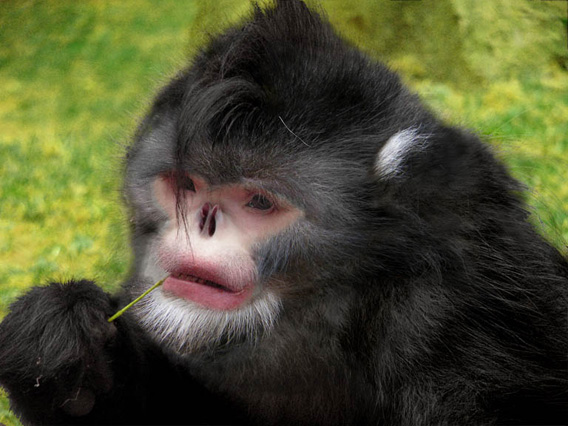
New Species of Critically Endangered Monkey Discovered

The Myanmar, or Burmese, Snub-Nosed Monkey was only recently discovered in early 2010. While no live examples of the species have been found, a carcass of the creature has offered insight into the lives of these new animals. Their open, upturned nose is its most distinguishable feature, causing the monkey to sneeze during storms as water enters his naval passages. To avoid this, the monkeys have been seen by locals sitting with their faces tucked downwards, protecting their noses from the rain.


The Myanmar Snub-Nosed Monkey has already been considered as being critically endangered, despite having never been scientifically documented. Researchers believe that that only approximately 300 individuals survive, having been hunted for their meat by the locals, and caught in traps. The Chinese logging industry is blamed as another cause of the monkeys' low numbers. The areas being cleared out, both legally and illegally, is encroaching upon the areas where these monkeys are thought to dwell. Conservationists are already moving to educate local people and to create a protected area where the monkeys can roam safely.

Thursday, September 16, 2010

New, Large Species of Elephant Shrew Discovered


The Zoological Society of London recently announced its discovery of a new species of elephant shrew. A DNA analysis to be performed to verify that the creature is indeed its own, heretofore unknown species. Those who have seen the above photograph of the new animal believe that it is indeed an independent creature, from the photo alone, simply because of its large size and coloring. Camera traps were set after a zoologist failed to recognize the unique looking animal in a north-eastern Kenyan forest. If this proves to be a unique species of elephant shrew, it will be only the eighteenth type of the strange animals to have been discovered.


Elephant shrews are found only in Africa, spread among various types of African landscapes, from mountains to forests to deserts. Elephant shrews, also known as sengis, are known most notably for their long snouts and small size. They are, interestingly, not actually related to shrews at all, but are instead more closely related to elephants, aardvarks, and hyraxes. They are very active during the daytime, but are not particularly social, aside from their monogamous relationships. They mostly eat worms and insects, and the occasional plant matter, using their nose to locate the food, and their tongue and teeth to take in pieces of their small prey. They have short life spans, living only up to four years.

The large elephant shrews are almost all considered to be vulnerable or endangered. The species are threatened by forest clearing and other forms of habitat destruction, as well as by being targeted as food. Conservation efforts have not been focused on the elephant shrews in particular, but some action has been done to protect the areas where they live.

Tuesday, September 14, 2010

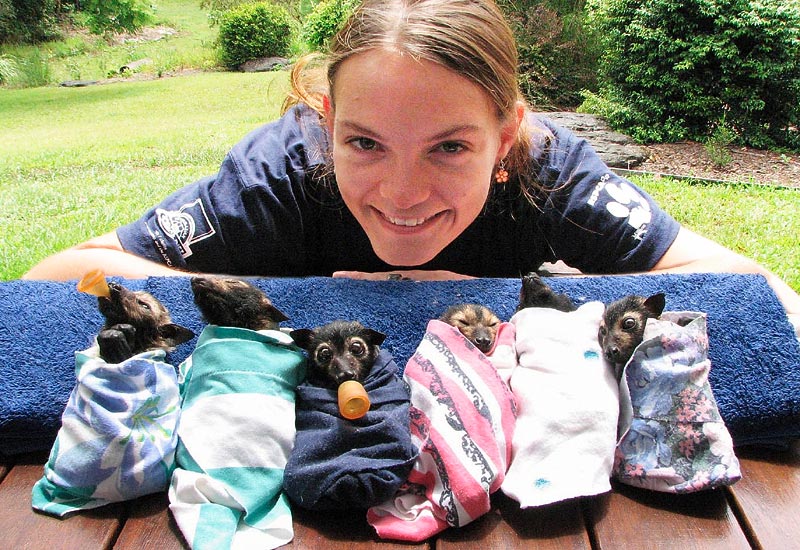
Possible Cure for Lethal Bat Disease


White nose syndrome is a recently-discovered fungal disease that has been killing millions of bats across the United States in the last few years. The disease harms the bats by irritating their skin, waking them out of hibernation. This causes the bats to waste their stored energy, trying to eat and fly while it is still too cold. It is also believed that the infection may harm the bats' wings.  It has been calculated that within the next two decades, several species of bats may be completely extinct because of this syndrome. Indiana bats (currently endangered), eastern pipistrelles, northern long-eared myotis, and little brown bats have all been recorded with the disease. It is estimated that 2.4 million pounds of bugs will go eaten because of the bat population decline.

New research however has shown the first sign of a possible cure. As white nose syndrome is well known to be a fungal infection, scientists recently began testing to see if human fungal eradicators could work on the bars as well. While research is still in preliminary stages, it has been found that many over the counter fungal medicines are beneficial in fighting against the infection. Methods of applying the new found knowledge are in discussion, as it is not known how different species of bats or caves may be affected.


The Indiana bat is perhaps most easily threatened species of bat, currently listed as endangered by the IUCN. The entire length of a bat is typically only one to two inches long. Since 1975, their population has been cut in half. They live an average of seven years and feed exclusively on insects. In addition to the recent onslaught of white nose syndrome, the bat has been threatened by predators (including their biggest predator, human beings), pesticide use, and forest decline.

Friday, September 10, 2010

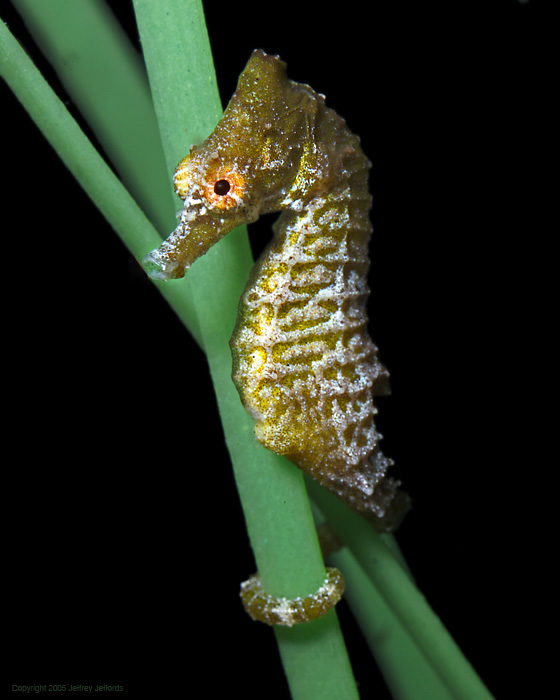
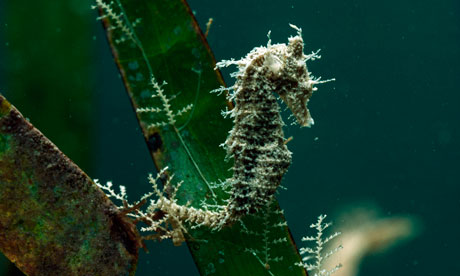
Rare Dwarf Seahorse Threatened by BP Spill


The Dwarf Seahorse, a rare and elusive creature to begin with, is threatened with the possibility of extinction due to the notorious oil spill that began April 20, 2010. These seahorses swell only in shallow waters throughout the Gulf of Mexico and the Bahamas. Because seahorses are poor swimmers, this species, like others of its kind, spend much of their time clinging to sea grasses. Unfortunately, clumps of vegetation near the oil spill were an easy destination for the heavy oil, collecting in the plants. The dark, clumpy oil starved the sea grasses, and the seahorses of light and oxygen. Aside from the murk and muck in the grasses caused simply by the oil, further complication arose when oil clean-up began to include setting such plant life ablaze, and releasing millions of gallons of toxic oil dispersent. Seahorses tend to produce relatively few offspring, and the grasses killed by the oil will need years to regrow. It is unclear how the oil and the dispersents may affect adults' hormones, or the health of newborn seahorse fry.


Dwarf seahorses are among the smallest species of seahorse, growing to only about two inches long. As with all seahorses, the males are the ones to become pregnant, carrying the babies for approximately ten days. They are carnivores, despite their small size, subsisting off baby brine shrimp and other shrimp larvae. Aside from the recent oil spill, the species has been threatened by the aquarium trade and from being bycatch during trawling. The size of the population is unknown, as they are rare, very small, and generally unresearched. Conservation efforts currently only involve regulations on the aquarium trade industry.